Technology has become deeply embedded in everyday life, shaping how people communicate, work, manage finances, and access information. Along with its benefits, this reliance brings new challenges—particularly around security, digital literacy, and well-being. Drawing on insights shared by a computer technician, this article explores common technology issues, best practices for staying safe, and broader social impacts of our increasingly digital world.
Everyday Technology Problems: Scams Over Broken Screens
Contrary to what many people expect, the most common technology problems are not cracked screens or failing hardware, but scams and malware. A significant portion of technical repair work today involves cleaning up compromised systems rather than fixing physical damage.
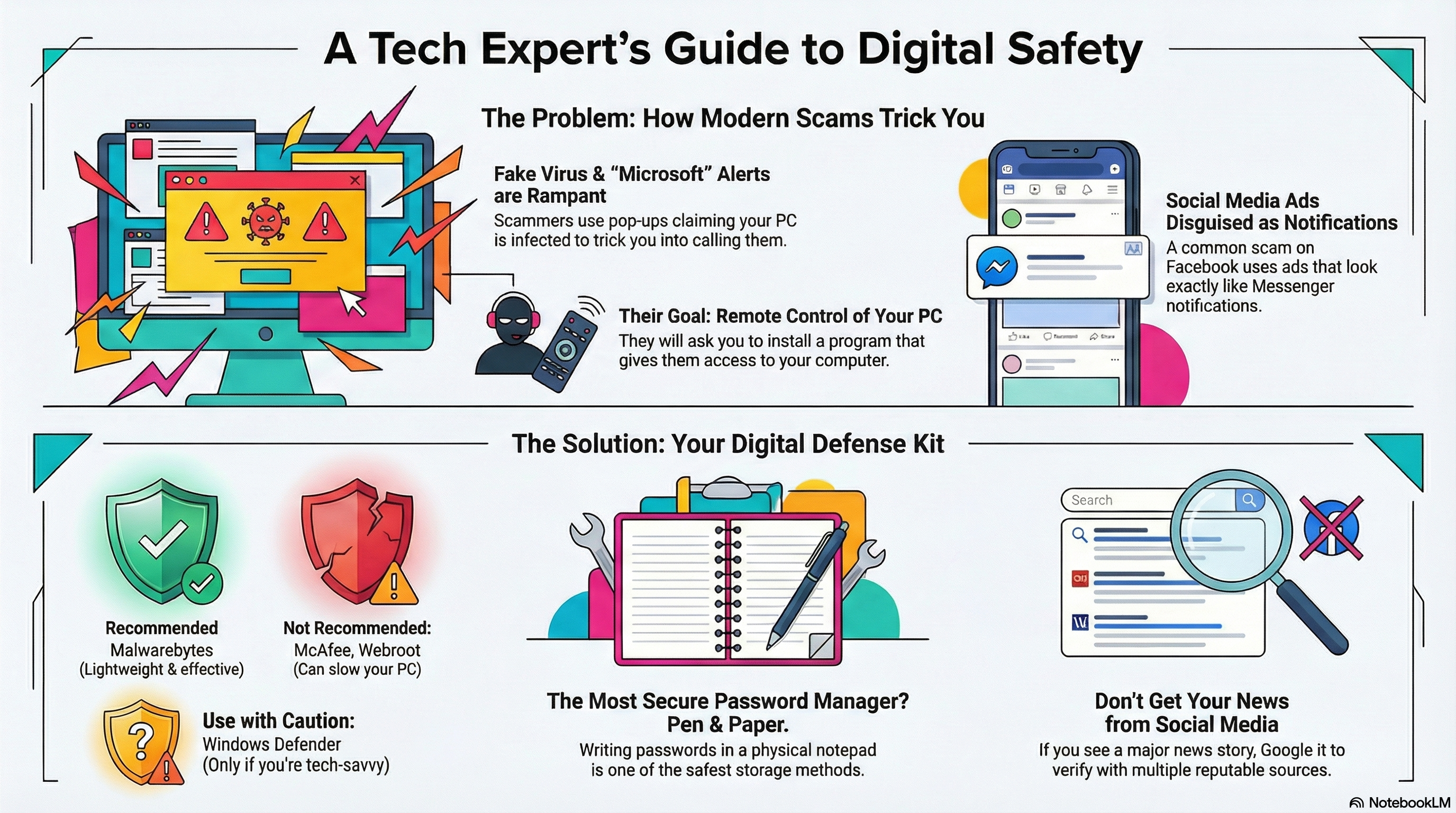
One of the most prevalent threats is the familiar “Microsoft” or “Windows Defender” pop-up warning users that their computer is infected and instructing them to call a phone number immediately. These scams rely heavily on fear and urgency. Once contact is made, scammers often present themselves as legitimate technical support, using convincing language and technical jargon to build trust. Their primary goal is to gain remote access to a user’s computer. To do this, they may display normal system tools—such as system logs—to create the illusion of serious problems. Users are then pressured to install software, grant remote control, and ultimately pay for unnecessary or entirely fake services, often costing hundreds of dollars.
Another growing issue involves deceptive online advertisements, particularly on social media platforms like Facebook. Some ads are designed to resemble legitimate notifications, such as Messenger alerts, and are placed strategically on the screen to encourage accidental clicks. These can lead users into similar scam scenarios. For those affected, the consequences can be disruptive and stressful, sometimes requiring bank accounts to be closed and professional assistance to remove malware and secure personal information.
Cybersecurity Basics: Awareness Over Complexity
When it comes to cybersecurity, user awareness remains one of the most effective defenses. For most people, the greatest risk is not advanced hackers targeting them personally, but everyday mistakes—clicking on deceptive links or responding to alarming messages without verification.
Data breaches are another persistent concern. Personal information is frequently leaked due to compromised business systems, yet accountability is often minimal. Companies may offer limited credit monitoring services, even when the long-term risks to individuals are significant. There are also concerns about third-party access to sensitive data. Call center employees, sometimes with minimal training, may have access to extensive financial and personal information, increasing the risk of misuse or accidental exposure.
In terms of protection, antivirus software plays an important role. Malwarebytes is frequently recommended for its effectiveness, lightweight performance, and ability to detect hidden or unwanted programs. In contrast, some widely known antivirus products are criticized for slowing down systems, aggressive marketing practices, and questionable data-handling policies. Built-in tools like Microsoft Defender can be sufficient for more experienced users, but may not catch all threats, especially those already operating within a system.
Digital Well-Being and the Human Cost of Constant Connectivity
Beyond security, technology has a profound impact on mental health and social behavior. For many people, especially smartphone users, their device has become a central hub for work, relationships, finances, and entertainment. This level of dependence can lead to heightened anxiety, even over minor technical issues, and the idea of being without a phone for a day can feel overwhelming.
There are also broader social consequences. Constant online engagement - particularly through social media - has been associated with a decline in face-to-face conversation skills. Younger generations, in particular, may spend more time interacting online than in person, altering how relationships are formed and maintained. The rise of content creators and live streaming has contributed to parasocial relationships, where audiences feel personally connected to online personalities they do not actually know. This can blur the line between real and virtual relationships, sometimes reinforcing isolation rather than reducing it.
Social media platforms themselves often amplify negative content. Algorithms tend to prioritize emotionally charged material, which can keep users in a prolonged state of stress or “fight or flight.” For some, disengaging from certain platforms becomes a necessary step toward protecting mental well-being.
Customer service experiences add another layer of frustration. Outsourced call centers, automated phone systems, and complex menus often leave users feeling unheard. While these systems are designed to reduce costs, they can inadvertently shift customer frustration onto frontline workers who have little control over the underlying issues. A recurring reminder is the importance of directing frustration toward systems and decisions, not individuals.
Passwords, Misinformation, and Everyday Digital Literacy
Managing passwords remains a persistent challenge. While digital password managers offer convenience, they can also be attractive targets for hackers. One surprisingly effective alternative is writing passwords down and storing them securely offline, which eliminates the risk of online database breaches. Many people cope with complex password requirements by reusing patterns across accounts, making small changes to meet different rules. While common, this practice still carries risks and can lead to forgotten credentials.
Digital literacy also includes navigating misinformation. Social media is widely viewed as a poor source for accurate, real-time news. Verifying claims through multiple reputable sources remains essential, especially as AI-generated content becomes more convincing. Synthetic voices, images, and videos can now imitate real people, making it increasingly important to look for corroborating evidence rather than trusting a single source.
Artificial Intelligence: A Tool, Not a Substitute
Artificial intelligence is still in an early stage of widespread adoption, but its potential is significant. Used thoughtfully, it can help compile information, simplify complex topics, and support creative processes. Rather than replacing human effort, AI can act as a catalyst—helping users brainstorm ideas, overcome writer’s block, or explore new perspectives.
The quality of AI output depends heavily on how questions or prompts are written, which can, in turn, help users develop clearer communication skills. The value often lies as much in the process of refining inputs as in the results produced. At the same time, moderation is important. Like other digital tools, excessive use can lead to unproductive consumption patterns, reinforcing the broader principle that balance matters.
Community Needs and Emerging Trends
A notable gap exists in digital literacy, particularly among retirees and others whose careers no longer require regular computer use. Skills that go unused tend to fade, leaving some people more vulnerable to scams and technical problems. Even younger generations can face challenges if their work and education rely primarily on mobile devices rather than traditional computers. There is also a growing trend toward device consolidation. Many users are replacing laptops with tablets or relying entirely on smartphones for email, payments, and entertainment. For younger users, handheld gaming systems combined with phones often eliminate the need for a desktop or laptop altogether.
On the infrastructure side, the expansion of fiber internet presents new opportunities. Faster speeds, competitive pricing, and simpler setup processes are increasingly appealing alternatives to long-established providers, signaling gradual shifts in how communities’ access and use digital services.
Closing Thoughts
Technology continues to reshape daily life in ways that are both subtle and profound. While new tools and platforms offer convenience and creativity, they also introduce risks that require awareness, adaptability, and ongoing learning. By focusing on practical security habits, maintaining digital balance, and strengthening community-level digital literacy, individuals can navigate the digital landscape with greater confidence and resilience.