Understanding MAGA-ism: Power, Belief, and Systemic Harm
A Cultural Health Analysis
This article examines American cultural health and its impact on well-being. Throughout this analysis, culture and belief systems are used interchangeably. The focus is on spirituality as it intersects with religion and politics, recognizing that these forces shape the dominant narratives—or “isms”—that guide collective behavior. Within this framework, culture is defined as how people in positions of authority treat vulnerable. This definition is intentionally scalable, allowing assessment across national, community, organizational, and even family contexts. By understanding culture this way, we can evaluate the belief systems that govern interactions, influence norms, and produce harm or well-being. Cultures—like belief systems—tend to be invisible to those immersed within them yet obvious to observers outside of them. With this in mind, I began exploring what can only be described as a toxic political environment in the United States, one where systemic harm has become normalized. MAGA-ism, as articulated in Project 2025, is a recent example of a belief system explicitly rooted in prejudice and in the marginalization of communities. To understand its cultural impact, I examined the intersections of religion, politics, and spirituality. Gallup data provided a useful entry point. Their polling indicates that 61% of Republicans identify as religious and 28% as spiritual, whereas only 37% of Democrats identify as religious and 41% as spiritual. Gallup’s historical data shows that the rise in spirituality over the past two decades comes primarily from those who identify with the Democratic ideology. These trends suggest that religion and spirituality now carry significantly different meanings in American life, producing two distinct belief systems with very different cultural expressions. MAGA-ism is sometimes compared to Nazism—Germany, after all, was a democracy before Hitler dismantled its institutions, and the Nazi Party frequently invoked the idea of “Make Germany Great Again.” However, China’s Cultural Revolution under Mao Tse-tung provides a closer parallel. The shared features of moral detachment, loyalty-driven identity, hostility toward intellectualism, and normalization of harm align more closely with Maoist dynamics than with fascism alone. The purpose of this article is to assess where MAGA-ism falls on the continuum of systemic harm within the broader study of cultural well-being.
Trump’s Methods and the Machinery of Power
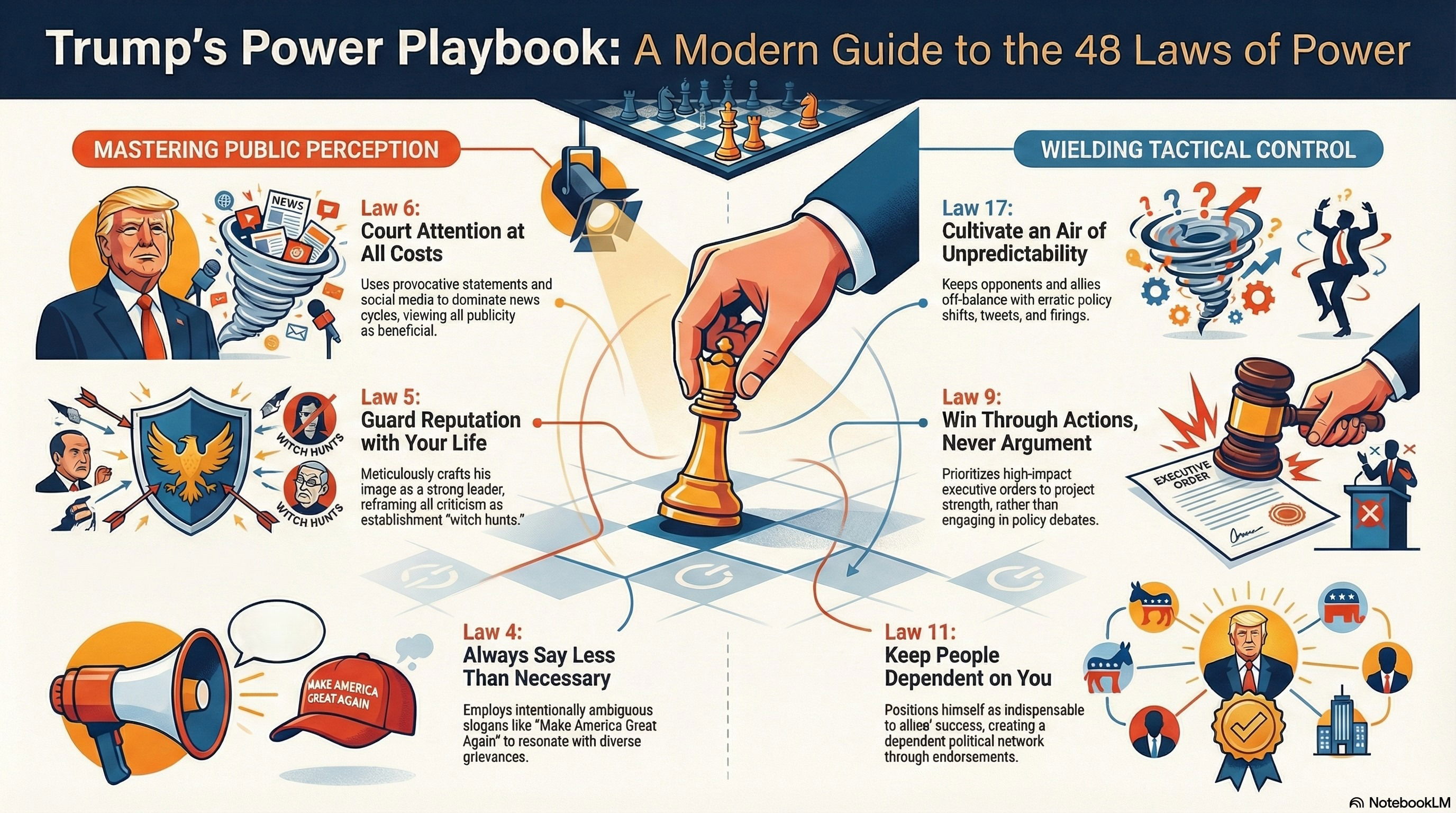
If you want to understand the methods of Donald Trump, The Prince by Niccolò Machiavelli is essential reading. Written in the 16th century, Machiavelli’s work lays out how leaders maintain power through fear, disruption, and constant narrative control. The key lesson: power can be preserved even at the expense of norms, morality, or social cohesion. To understand how Trump got elected, Jesus and John Wayne: How White Evangelicals Corrupted a Faith and Fractured a Nation by Kristin Kobes Du Mez is equally vital. Du Mez traces how a specific form of militant, patriarchal Christian nationalism shaped the cultural conditions that made MAGA possible. Together, these texts highlight both method and environment: the leader’s strategies and the cultural soil that enables them to take root.
Data on Policy Harm Policy decisions during the Trump administration produced measurable harm across health, immigration, and public safety:
- Health Coverage Loss
- From 2016 to 2019, about 2.3 million Americans lost insurance coverage, contributing to an estimated 3,399–25,180 excess deaths among non-elderly adults.
- COVID-19 Response
- Tens of thousands of U.S. COVID deaths were avoidable with stronger federal guidance.
- Mixed messaging on masks and minimizing the virus’s severity delayed public compliance.
- Family Separation
- The “zero tolerance” policy separated over 5,000 children from their parents; more than 1,000 remain separated years later.
- The trauma inflicted is considered by many experts to constitute long-term psychological harm.
- Erosion of Public Health Infrastructure
- Cuts to public health budgets and the weakening of safety nets diminished emergency preparedness.
- Even before COVID-19, the U.S. had increasing “excess deaths” relative to peer nations.
These are not abstract harms—they are measurable, systemic, and deeply consequential.
Parallels to the Cultural Revolution MAGA-ism shares notable similarities with Mao’s Cultural Revolution, though differing in scale and method:
- Targeting “Enemies”
Intellectuals, scientists, journalists, and administrators become objects of suspicion or attack. - Simplified Ideology
Complex issues are reduced to slogans—patriots vs traitors, insiders vs outsiders. - Mobilizing Grievance
Anger and nostalgia become political engines, replacing deliberative reasoning. - Institutional Erosion
Loyalty becomes more important than competence, weakening democratic and bureaucratic institutions.
The key difference: Mao used state-driven mass violence, while MAGA-ism operates through policy, rhetoric, and culture. But the rhetorical and ethical patterns show troubling parallels in how harm becomes normalized.
Religion, Spirituality, and Cultural Resonance The rise of MAGA-ism is inseparable from shifts in religiosity and spirituality:
- Republican identification with religion has remained consistently high since the late 1990s.
- In contrast, the growth in Americans who identify as “spiritual but not religious” is concentrated among Democrats.
- These differences create distinct moral languages and divergent cultural worldviews.
MAGA-ism’s fusion of patriotism, grievance, and religious identity provides followers with moral certainty—even when the policies enacted produce harm.
Conclusion:
Loyalty, Ideology, and Moral Detachment MAGA-ism is more than a political movement—it is a belief system centered on loyalty, identity, and grievance, reinforced by moral detachment. The Prince reveals how leaders harness disruption and fear to maintain power. Jesus and John Wayne shows how militant Christian nationalism created the cultural readiness for MAGA-ism’s rise. Together, they help explain why harm can be normalized without moral pause. Moral detachment within MAGA-ism shows itself in several ways:
- Normalization of harm to democratic systems and vulnerable communities
- Simplification of ethics into binary loyalty tests
- Emotion-over-reflection that elevates outrage over empathy
The parallels to Mao’s Cultural Revolution emphasize the danger: when ideology replaces ethical responsibility, harm becomes systemic and accountability evaporates. MAGA-ism sits disturbingly high on the continuum of systemic harm. Understanding its belief structure is essential for safeguarding societal well-being—and for rebuilding a culture where authority is measured not by loyalty demanded but by care extended.
Recommended Reading
Allport, G. W. (1954). The Nature of Prejudice. Addison-Wesley.
Budde, M. E. (2023). How we learn to be brave: Decisive Moments in Life and Faith. Convergent Books.
Du Mez, K. K. (2020). Jesus and John Wayne: How White Evangelicals Corrupted a Faith and Fractured a Nation. Liveright Publishing.
Machiavelli, N. (2005). The Prince (P. Bondanella, Trans.). Oxford University Press. (Original work published 1532)